


– Vitamin D supplementation is essential for those with connective tissue disorders
– Toxicity is very rare, and it didn’t take place even when “Darwin Awards doses” were followed by mistake
– Current dose recommendations reflect a statistical error that remains uncorrected
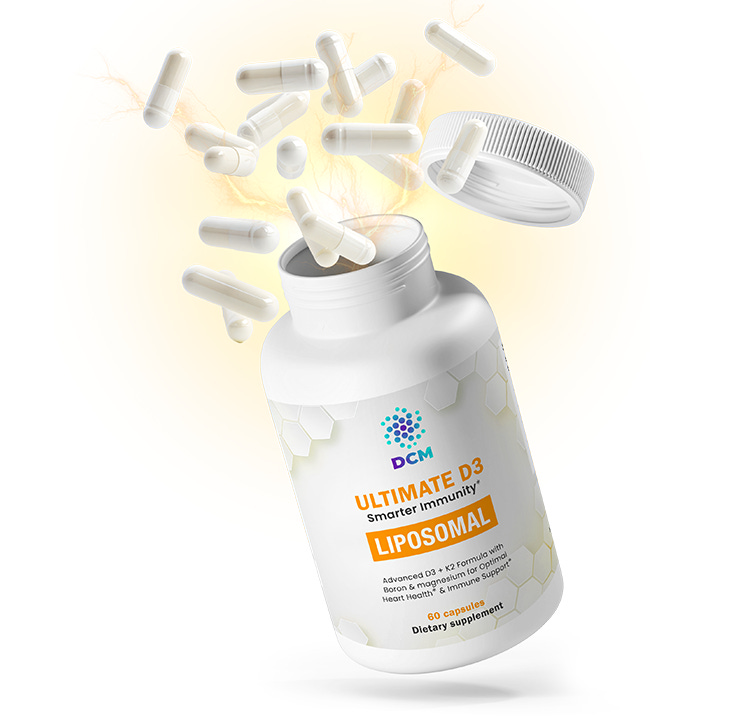
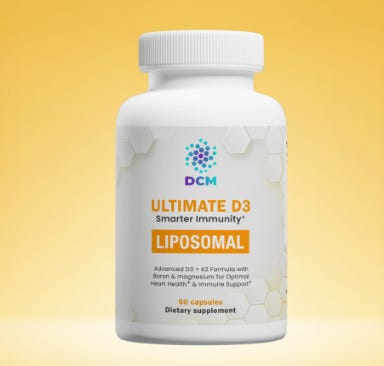
– Liposomal vitamin D plus cofactors is the best option when active vitamin D (calcifediol) is not available, especially for the “metabolically-challenged”
Some influential voices speak negatively about vitamin D supplementation with an overconfidence you typically see among those raised in certain milieus in the Western world, where rates of ‘entitlement to one’s own opinion’ are the highest in the world.
Perhaps I’m just feeling raw, immersed in the war-zone of contradictions that comprises “standard medical practice” nowadays, and where excess mortality and morbidity is the “new normal,” despite systematic denial about it. If humanity is ever going to make it, we must beware of authoritative statements that are potentially detrimental to our health. Reality is complex, and the law of three should always be kept in mind: there’s good, there’s bad, and there’s the contextual situation that specifies which is which.
If you’re relatively healthy and you can manage to have decent vitamin D levels with light therapy and a nutrient-dense organic diet, my most sincere felicitations to you. It’s wrong, however, to assume that everyone is built the same. People with connective tissue disorders have systematically-low levels of vitamin D, and their problem is not at the level of receptors and their ligands. The cellular environment surrounding each of their receptors, including their vitamin D receptors, is qualitatively different from that of a normally-wired person.
The science of biochemistry and molecules is not particularly useful in connective tissue disorders, so a materialist “molecular worldview” doesn’t help with understanding a spectrum of disorders that could afflict as much as 10-12% of the population [1]. As it happens, some people with connective tissue disorders are so “transparent,” they can’t tolerate sun exposure without expiring or breaking out in lenticular spots after just a few minutes of sunlight, or even therapeutic red light.
The Answers are in Vitamin D’s History
In the first half of the 20th century, when there was simply no way to measure vitamin D levels and thus it was never a cause of shock, people were using up to 600,000 units of vitamin D per day for up to 18 months to relieve symptoms of rheumatoid arthritis.
I’m not recommending that anyone do that – my point is, to “overdose” on vitamin D, you would have to make a supremely stupid mistake, the likes of which would earn you a Darwin Award.
If you have a rare genetic metabolic anomaly or tumor that makes you accumulate calcium easily, you’ll likely learn about it through a symptom or clinical manifestation, plus its corresponding medical diagnostic work. In such cases, vitamin D supplementation is not a good idea until you address the cause of your disease.
For most people, the reported toxic effects come from outrageous mistakes, i.e. those who thought a bi-monthly dose was meant to be taken on a daily basis for over a year. And even then, there are actually cases of remarkable recovery after making such “mistakes.”
Let’s look at worst-case scenarios. A toxicity report from 2011 describes an individual who inadvertently took 970,000 IUs daily for one month, and another who took 1,864,000 IUs of vitamin D3 daily for 2 months. Both individuals became symptomatic from the hypercalcemia induced by the vitamin D. The first had a serum 25OHD level of 645 ng/ml, and a calcium level of 13.2 mg/dl, and the second had a serum 25OHD level of 1220 ng/ml, and a calcium level of 15.0 mg/dl. However, the hypercalcemia resolved in both patients after cessation of the vitamin D supplement. Symptoms resolved and the calcium levels became normal after the 25OHD level dropped below 400 ng/ml.
I think it’s highly unlikely that anyone reading this would make the mistake of taking nearly two million units of vitamin D3 per day for nearly two months.
The Error at the Heart of Vitamin D Orthodoxy
Most people today are still paying the price of a statistical error that is literally the stuff of nightmares, considering current excess mortality rates. Rigid left-hemisphere thinking has led to the mass roll-out of mRNA vaccines against specific diseases, despite the mounting evidence that these result in turbo cancers, autoimmune disease, metabolic syndrome, etc. And yet, adequate levels of vitamin D, which prevents all the aforementioned diseases, are discouraged due to a simple mistake that no one cares to redress.
Dr John Campbell explains the mistake thusly:
The Institute of Medicine’s goal was to find a vitamin D dose that ensures 97.5% of individual people reach a healthy blood level (50 nmol/L).
The statistical error occurred because the IOM analysed the averages of different studies rather than the data of individual participants.
They looked at 10 studies and took the average blood levels achieved in those studies.
They calculated a statistical range (Confidence Interval) based on those averages.
They found that with 600 IU, 97.5% of the study averages would hit the target.
The Problem
There is much less variation between “averages” than there is between “individuals.”
By using the averages, the IOM accidentally “smoothed out” the data.
They assumed that if the average person in a study was fine, then almost everyone was fine.
The Classroom Analogy
Imagine you want to ensure every student passes a test.
The IOM method
They looked at the average scores of 30 different classrooms. They set a curriculum so that 97.5% of classrooms would have a passing average.
The Reality
Even in a classroom with a passing average, there are students who fail.
The Correction
To ensure 97.5% of students pass, you have to look at the lowest-performing students, not the class average.
The Consequence
When the authors of this paper re-calculated the numbers using the variation of individuals (rather than study averages), they found that the current RDA of 600 IU does not cover 97.5% of the population.
Instead, it only ensures that 97.5% of people reach a blood level of 26.8 nmol/L (far below the target of 50 nmol/L).
To actually get 97.5% of the population to the healthy target of 50 nmol/L, the math suggests you would need a dose of 8,895 IU per day.
You can get Long COVID with levels of vitamin D at 26.8 nmol/L or below. And because it can always get worse:
The incidence of type 1 diabetes (T1D) has been doubling every 20 years. In Finland, the recommendation for daily vitamin D supplementation was gradually reduced from 4000-5000 IU in 1964 to 400 IU in 1992. Concomitantly, T1D increased by 350% in those aged 1-4 years, 100% in those aged 5-9 years, and 50% in those aged 10-14 years
These highlights sum it up very well:
• Daily dosing with vitamin D ranges from 5000 IU/day to 50,000 IU/day.
• No cases of hypercalcemia were observed using these doses of vitamin D for up to 7 years.
• The highest 25OHD blood level attained on 10,000 IU/day was 202 ng/ml.
• Mean 25OHD levels on 10,000 IU/day were 96 ng/ml and 116 ng/ml in 2 data sets.
• A case of asthma and psoriasis were controlled with 25,000 IU/d and 50,000 IU/d.
These are how international guidelines should look like:
The largest meta-analysis ever conducted of studies published between 1966 and 2013 showed that 25-hydroxyvitamin D levels <75 nmol/L may be too low for safety and associated with higher all-cause mortality, demolishing the previously presumed U-shape curve of mortality associated with vitamin D levels. Since all-disease mortality is reduced to 1.0 with serum vitamin D levels ≥100 nmol/L, we call public health authorities to consider designating as the RDA at least three-fourths of the levels proposed by the Endocrine Society Expert Committee as safe upper tolerable daily intake doses. This could lead to a recommendation of 1000 IU for children <1 year on enriched formula and 1500 IU for breastfed children older than 6 months, 3000 IU for children >1 year of age, and around 8000 IU for young adults and thereafter. Actions are urgently needed to protect the global population from vitamin D deficiency.
Liposomal Vitamin D3 plus Cofactors
As I have before, calcefidiol, the active vitamin D3, helped one of my most recalcitrant Long COVID patients. The problem is the inaccessibility of this life-saving product due to bureaucratic restrictions which makes no sense in view of all the information above.
When liver issues are suspected, whether acquired (i.e. fatty liver) or otherwise, active vitamin D3 is the way to go to bypass any activation problem at that level. And liposomal vitamin D3 increases calcefidiol, the active vitamin D3, because this format deals with the repelling properties of vitamin D3 with water (hydrophobicity).
Vitamin D3 deficiency has serious health consequences, as demonstrated by its effect on severity and recovery after COVID-19 infection. Because of high hydrophobicity, its absorption and subsequent redistribution throughout the body are inherently dependent on the accompanying lipids and/or proteins. The effective oral vitamin D3 formulation should ensure penetration of the mucus layer followed by internalization by competent cells. Isothermal titration calorimetry and computer simulations show that vitamin D3 molecules cannot leave the hydrophobic environment, indicating that their absorption is predominantly driven by the digestion of the delivery vehicle. In the clinical experiment, liposomal vitamin D3 was compared to the oily formulation. The results obtained show that liposomal vitamin D3 causes a rapid increase in the plasma concentration of calcidiol [or calcefidiol, active vitamin D3]. No such effect was observed when the oily formulation was used. The effect was especially pronounced for people with severe vitamin D3 deficiency.
People who have systemically-low levels of vitamin D, despite “doing everything right,” or have malabsorption or digestive and liver issues, would benefit from supplementing with liposomal vitamin D. Moreover, vitamin D cofactors such as boron, vitamin K2 and magnesium should also be considered to facilitate proper assimilation and utilization of vitamin D.
In case of doubt, get active vitamin D3 and the recommended cofactors.
Note
[1] Every person I have met with Ehler-Danlos has told me that specialists and people in general don’t understand them, as if you have to be afflicted in order to get it. I made my rotations in one of best centers for cardiac surgery for people with connective tissue disorders and no one there even suspected I was affected. The blind spot is bizarre. The common denominator in those who understand connective tissue disorders is that they are themselves ‘on the spectrum’ at some level or they have faith in the afflicted person and in what they are relating.
References
Dr. John Campbell, Vitamin D Mistake
Dalek et al. Bioavailability by design — Vitamin D3 liposomal delivery vehicles. Nanomedicine: Nanotechnology, Biology and Medicine. Volume 43, July 2022, 102552
McCullough, Lehrer et al. Daily oral dosing of vitamin D3 using 5000 TO 50,000 international units a day in long-term hospitalized patients: Insights from a seven year experience. The Journal of Steroid Biochemistry and Molecular Biology. Volume 189, May 2019, Pages 228-239
Holick, Michael F. Vitamin D Is Not as Toxic as Was Once Thought: A Historical and an Up-to-Date Perspective. Mayo Clinic Proceedings, Volume 90, May 2015, Issue 5, 561 – 564
Papadimitriou DT. The Big Vitamin D Mistake. J Prev Med Public Health. 2017 Jul;50(4):278-281. doi: 10.3961/jpmph.16.111. Epub 2017 May 10. PMID: 28768407; PMCID: PMC5541280.
Veugelers PJ, Ekwaru JP. A statistical error in the estimation of the recommended dietary allowance for vitamin D. Nutrients. 2014 Oct 20;6(10):4472-5. doi: 10.3390/nu6104472. PMID: 25333201; PMCID: PMC4210929.
ShareJAN
About the Author:
A countryside family medicine doctor and former heart surgeon in service of the Hippocratic Oath.