


Personal experience, background research and relevance nowadays
Doxycycline and minocycline are tetracycline antibiotics with anti-inflammatory properties. Doxycycline is perhaps the most accessible and cost-effective. As an antibiotic, it is used alongside other drugs to treat Lyme disease, cat scratch disease, and other infections caused by atypical bacteria. It is also helpful in treating pneumonia, sinusitis, dermatological diseases, and other infections. Therapeutic doses are 4 mg per kg per day or 200 mg per day, administered in divided doses or as a single daily dose; either approach will work.
As an anti-inflammatory, doxycycline acts at multiple levels and on several inflammatory pathways, which I will review below. Anti-inflammatory doses are 25, 40, or 50 mg per day. These are considered low doses, with anti-inflammatory effects that occur independently of any antimicrobial effect.
Research background
Both laboratory and clinical studies have explored the anti-inflammatory properties of tetracyclines. Tetracyclines inhibit matrix metalloproteinases (MMPs), which are enzymes that play an important role in the remodeling of connective tissue. These enzymes are involved in wound healing, rheumatoid arthritis, and tumor invasion and metastasis. Some MMPs break down collagen. Doxycycline inhibits this process, sparing collagen.
Angiogenesis, the formation of new blood vessels, occurs in many diseases, including benign conditions such as rosacea and malignant conditions such as cancer and its metastases. MMPs, present in the extracellular matrix of tissues, facilitate angiogenesis by allowing new blood vessels to penetrate the matrix. Minocycline and doxycycline inhibit angiogenesis induced by implanted tumors in animal models. Doxycycline inhibits the synthesis of MMPs by endothelial cells. The anti-angiogenic effect of tetracyclines may have therapeutic implications in inflammatory processes accompanied by new blood vessel formation (e.g., autoimmune disorders, rosacea, and cancer invasion).
Apoptosis, or programmed cell death, is a key homeostatic and developmental process in any organism. Diseases such as cancer and neurodegenerative disorders may result from its dysregulation. Experimental data indicate that tetracyclines have antiapoptotic properties. Minocycline may also have beneficial effects in chronic neurodegenerative diseases such as Huntington’s disease and amyotrophic lateral sclerosis (Allen N. Sapadin; Raul Fleischmajer. (2006). Tetracyclines: Nonantibiotic properties and their clinical implications. J Am Acad Dermatol 54(2), 0–265).
Doxycycline has properties that counter amyloidosis, neuroinflammation, and oxidative stress. It also crosses the blood–brain barrier more easily and has a safer clinical profile, making it ideal as a preventive strategy in prion diseases. It has also shown significant positive preclinical results in animal models of Alzheimer’s disease, acting against Alzheimer’s plaques in the brain (Aβ oligomers) and neuroinflammation (Balducci C, Forloni G. Doxycycline for Alzheimer’s Disease: Fighting β-Amyloid Oligomers and Neuroinflammation. Front Pharmacol. 2019 Jul 3;10:738).
Prophylactic administration of doxycycline reduces the severity of osteoarthritis in animal models. It also stimulates new bone formation, decreasing osteoporosis (Allen N. Sapadin; Raul Fleischmajer. (2006). Tetracyclines: Nonantibiotic properties and their clinical implications. J Am Acad Dermatol 54(2), 0–265).
Tetracyclines are used to treat acne, rosacea, bullous dermatoses (which are now often a side effect of chemotherapy), sarcoidosis, Kaposi’s sarcoma, pyoderma gangrenosum, hidradenitis suppurativa, Sweet’s syndrome, and pityriasis lichenoides chronica. Their use in non-dermatological conditions includes the treatment of periodontitis, rheumatoid arthritis, scleroderma, cancer, and cardiovascular disease.
The administration of 200 mg of doxycycline for seven days before aortic aneurysm surgery resulted in up to a fourfold reduction in MMPs, thereby reducing collagen degradation in the aortic wall. In a randomized, double-blind, placebo-controlled pilot study involving 32 patients, doxycycline administration was associated with a significant reduction in aneurysm expansion rates, as demonstrated by ultrasound surveillance. Preliminary data also showed that doxycycline reduces inflammatory cell activity (polymorphonuclear leukocyte activity) in patients with acute myocardial infarction (Allen N. Sapadin; Raul Fleischmajer. (2006). Tetracyclines: Nonantibiotic properties and their clinical implications. J Am Acad Dermatol 54(2), 0–265).
In adult periodontitis, the oral administration of low-dose doxycycline (20 mg twice daily) as an adjunct to conventional procedures resulted in a significant improvement in tooth attachment, as well as reductions in pocket depth and bleeding on probing (Allen N. Sapadin; Raul Fleischmajer. (2006). Tetracyclines: Nonantibiotic properties and their clinical implications. J Am Acad Dermatol 54(2), 0–265).
Doxycycline has been reported to treat depression and attention deficit disorder and has also been used successfully to treat schizophrenia. This supports the idea that these diseases may often be due to “parasitic” (atypical bacterial) infections with a significant inflammatory component.
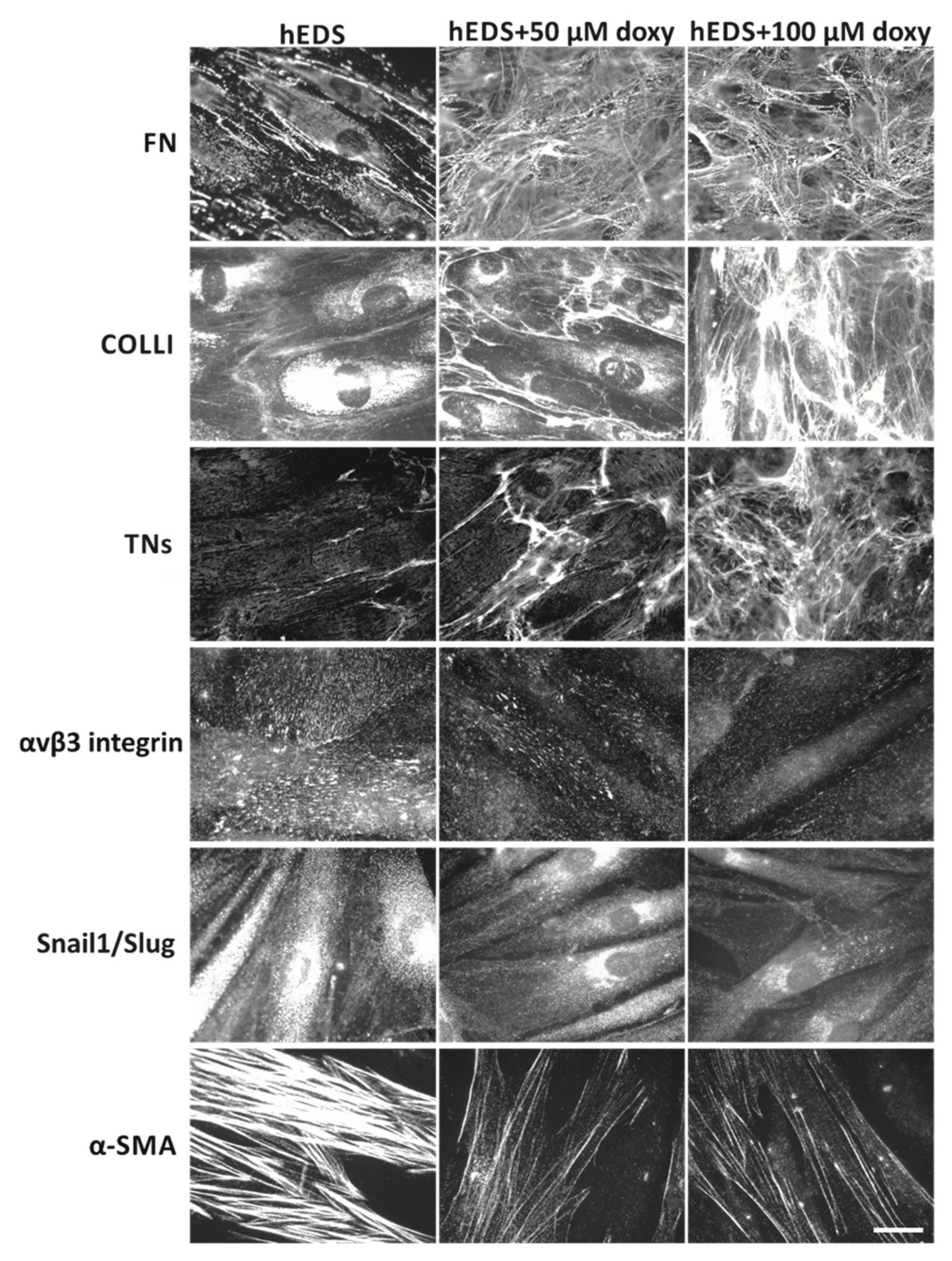
Current interest in doxycycline stems from its anti-inflammatory effects on connective tissue. In other words, it acts positively on tissue that is often inflamed in conditions such as long COVID, chronic fatigue, mast cell activation syndrome, Ehlers–Danlos syndrome, hypermobility spectrum disorders, cancer, and fibrosis. The following article provides an update on the research discussed above, highlighting doxycycline’s importance in preventing tissue degradation by downregulating inflammation and improving the quality and quantity of collagen and connective tissue.
Chiarelli, N. et al. (2021). Matrix Metalloproteinases Inhibition by Doxycycline Rescues Extracellular Matrix Organization and Partly Reverts Myofibroblast Differentiation in Hypermobile Ehlers-Danlos Syndrome Dermal Fibroblasts: A Potential Therapeutic Target? Cells, 10(11), 3236.)
However, considering the clinical overlap with other EDS [Ehler Danlos Syndrome] forms, which lead to abnormalities in extracellular matrix (ECM), it is plausible that the mechanisms underlying hEDS pathogenesis also affect the ECM to a certain extent. Herein, we performed a series of in vitro studies on the secretome of hEDS dermal fibroblasts that revealed a matrix metalloproteinases (MMPs) dysfunction as one of the major disease drivers by causing a detrimental feedback loop of excessive ECM degradation coupled with myofibroblast differentiation. We demonstrated that doxycycline-mediated inhibition of MMPs rescues in hEDS cells a control-like ECM organization and induces a partial reversal of their myofibroblast-like features, thus offering encouraging clues for translational studies confirming MMPs as a potential therapeutic target in hEDS with the expectation to improve patients’ quality of life and alleviate their disabilities.
The ECM (extracellular matrix) regulates tissue architecture and homeostasis as it provides chemical and mechanical signals to cells modulating their phenotype and responses to coordinate tissue functions. ECM molecules interact with each other creating a functional network that also involves cell–ECM interactions through cell surface receptors that are critical for proper cell and tissue functionality [22]. The importance of the ECM as a multitasking player is underlined by the fact that its perturbation is at the origin of many acquired and inherited human disorders [23,24]. […] For instance, the development and progression of various disorders comprising osteoarthritis (OA), rheumatoid arthritis (RA), fibrotic conditions, and cancer are associated with abnormal ECM remodeling, which drives disease progression by activating specific cell surface receptors and downstream signaling cascades that regulate cell-matrix-interactions [22,27].
In joint inflammatory diseases (e.g., OA and RA), it is well documented that an excessive ECM proteolysis upon cellular stress or tissue injury generates ECM degradation products that act as damage-associated molecular pattern molecules or DAMPs (e.g., FN, tenascin C (TNC), proteoglycans) [33,34,35,36]. These danger molecules promote maladaptive responses by inducing the expression of proinflammatory mediators and cytokines, nitric oxide, along with proteinases (including MMPs) that in turn, degrade further ECM components, creating a degradative and inflammatory feedback loop [37,38,39,40,41].
The pivotal role of MMPs as crucial mediators of this vicious cycle was further emphasized by the results obtained treating patients’ cells with the doxy, an FDA-approved antibiotic acting as a nonselective MMP inhibitor. Doxy was able to restore in hEDS cells an appropriate ECM organization alongside a significant attenuation of myofibroblast-like phenotype.
Doxy, acting via MMPs inhibition, immunomodulation, and nitric oxide synthase inhibition, has already provided encouraging results, in terms of biochemical and functional improvements including not only pain but also neuroinflammation-associated symptoms (e.g., anxiety and depression), in several human clinical trials for the treatment of osteoarthritis and rheumatoid arthritis [21]. Likewise, clinical trials on X-fragile syndrome (FRAXA) with minocycline, another tetracycline derivative, has also shown to markedly ameliorate patients’ behavioral symptoms (e.g., anxiety, mood disorders, sleep disturbance, defects in memory consolidation)
[…] Based on these observations in other human disorders with a perturbed ECM homeostasis associated with a pro-MMPs-involving pathogenesis might explain several of the patients’ clinical signs and symptoms ranging from musculoskeletal complaints including pain to neurological issues. Although our promising findings were obtained in vitro and on a limited number of hEDS patients’ cells, we speculate that tetracyclines or other MMPs inhibitors could alleviate, at least in part, the complex patients’ clinical phenotype.
Personal experience
I first tried doxycycline over a decade ago after stumbling upon Prof. Garth L. Nicolson’s research on “Mycoplasmal Infections in Chronic Illnesses: Fibromyalgia and Chronic Fatigue Syndromes, Gulf War Illness, HIV-AIDS and Rheumatoid Arthritis.” I suspected that I had acquired a chronic, latent infection through the vaccination program required for my medical training. As it happens, viral vaccines can be cross-contaminated with other microorganisms and retroviruses because of the way the target vaccine virus is cultured in animal cells. Keep in mind this was before the COVID-19 era. It was about that time that I learned about “vaccine shedding”. There were reports that, after a soldier was vaccinated, several close family members suddenly developed chronic fatigue, suggesting an infectious cause (Gulf War Syndrome, 1990s). You can read one of Prof. Nicolson’s mainstream articles here, published just before COVID-19:
“Pathogenic Mycoplasma Infections in Chronic Illnesses: General Considerations in Selecting Conventional and Integrative Treatments” written by Garth L. Nicolson, published by International Journal of Clinical Medicine, Vol.10 No.10, 2019
I took doxycycline for six months at clinical doses, during which time my allergies diminished greatly, my sinuses cleared up for the first time in years, and I had more energy. My facial skin became clear and radiant, my bowel movements became regular, I lost weight associated with fluid retention, and my focus became laser-sharp. It also had an overall anti-anxiety effect, which enabled me to practice medicine in one of the most challenging regions for a doctor.
Fast-forward to the post-COVID-19 era, and doxycycline became well known again, with various countries treating COVID through the use of ivermectin, doxycycline, colchicine, and other old-school drugs. Based solely on research into Gulf War Syndrome and autoimmune treatment protocols involving doxycycline, I said this before the COVID vaccines were rolled out: “Doxycycline is a must-have,” and stocked up several years before COVID made the news.
I think you can count on doxy to regulate “untreatable” inflammation and conjunctive tissue disruption and degradation.
Tip for a trial low-dose: doxy 25 to 50 mg per day.
ShareNOV
About the Author:
A countryside family medicine doctor and former heart surgeon in service of the Hippocratic Oath.